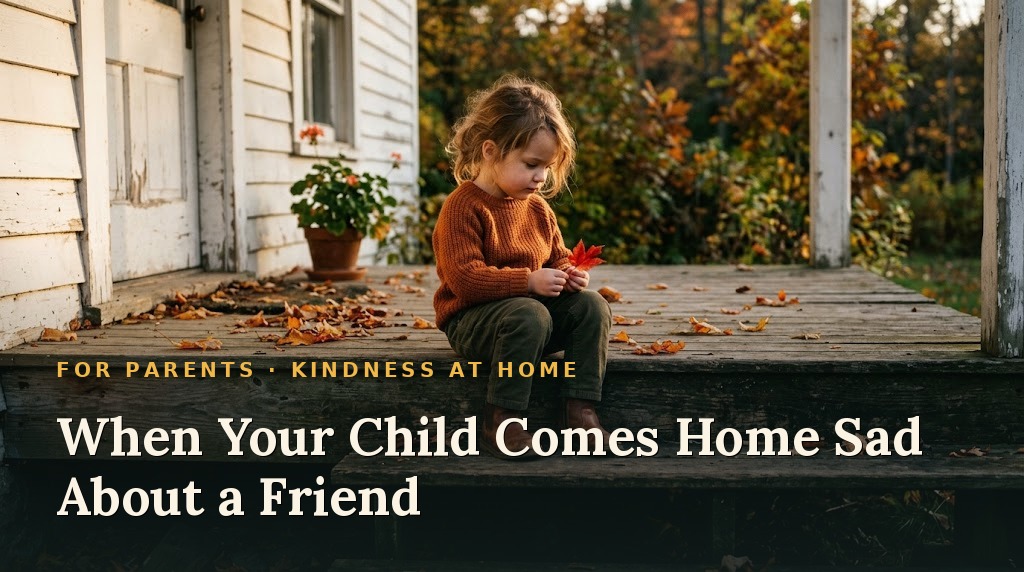
Sooner or later, every child comes home carrying something heavy. It shows up in a quiet voice at the dinner table, or in a lip that starts to quiver at bedtime. And when you finally hear what happened, it is almost always about a friend. “She wouldn’t let me play.” “He said I couldn’t sit by him.” “They ran away when I came over.”
If you are a parent, you know that particular ache. Your child’s friendship troubles land on you twice; once as their sadness, and once as your own helplessness. You want to fix it. You want to march down to the playground and make it right. So let me offer a few gentle things you can do instead, the next time your little one comes home sad about a friend.
Listen before you fix
The instinct is to jump straight to solutions. But a child who is hurting does not need a plan yet; they need to be heard. Sit down at their level. Let them tell the whole story, even the parts that don’t quite make sense. You might just say, “That sounds really hard. Tell me more.” When you listen first, you send a bigger message than any advice could: you are not alone in this.
Name the feeling out loud
Little kids often can’t find the word for what is sitting in their chest. So help them find it. “It sounds like you felt left out.” “I think that made you feel sad, and maybe a little embarrassed.” Naming a feeling does not make it bigger; it makes it manageable. It tells your child that what they feel is real, and that feelings are safe to talk about in your home.
Resist making the other child the villain
This one is hard. When someone hurts your child, everything in you wants to call that other kid mean and be done with it. But children are all still learning how to be friends, yours included. The child who wouldn’t share today may be having the worst week of their small life. You can hold your child close and still leave room for grace. That balance is where real kindness grows.
Point them toward their next choice
Once your child feels heard, you can wonder out loud together. “What do you think you want to do tomorrow?” Maybe they try again. Maybe they find a different friend for a while. Maybe they decide to be the one who invites someone else in. In our book, when Toby gets splashed right off his lily pad, his friends tell him to splash back. He doesn’t. He chooses a kinder path, and it changes everything. Your child gets to make that same kind of choice, in their own small way.
None of this makes the hurt disappear overnight. But it does something better. It teaches your child that hard feelings can be shared, that people can be forgiven, and that they always have a say in what they do next.
That is a lesson worth coming home to.
With the help of Heavenly Father, I believe every child can learn to meet a hurt with kindness. And it often starts at your kitchen table, with you.
Cory