When Your Child Comes Home Hurt: Start by Listening
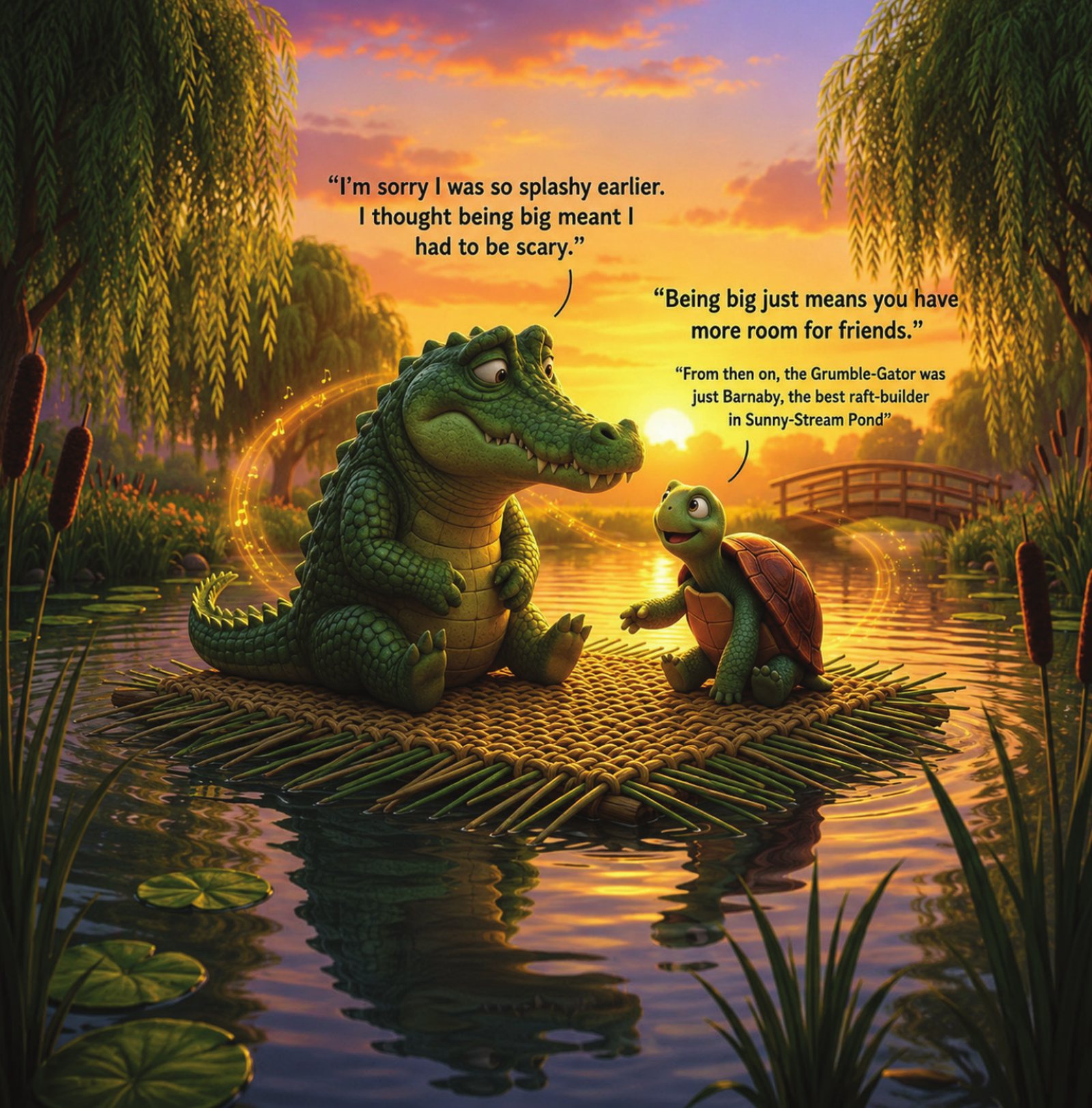
Every parent wants their child to feel safe. But we can’t follow them onto the bus, into the lunchroom, or out to the playground. So the best thing we can give them isn’t our protection; it’s the tools to face a hard moment on their own. In The Grumble-Gator’s Greatest Raft, Toby meets meanness with a calm heart instead of a raised fist. That kind of strength starts at home, in the way we talk with our kids. Here is where to begin.
1. Listen before you fix
When your child tells you something happened, the first job is not to solve it. It’s to hear it. Ask open-ended questions and let them talk. “What happened next?” “How did that make you feel?” When you listen without jumping straight to a solution, you learn what is really going on, and your child learns that you are a safe person to come to. That trust matters more than any single piece of advice you could give.
2. Name the feeling, not just the problem
A child who is being bullied usually feels small. So help them put words to it. Let them know that feeling hurt or scared does not mean something is wrong with them; it means something wrong was done to them. That is a big difference, and children need to hear it out loud. When they understand their own worth, a bully’s words start to lose their grip.
3. Practice a calm, confident response
Bullies are looking for a reaction. So the strongest thing a child can do is not give them the big one they want. Practice simple responses at home, out loud, until they feel natural. “Stop.” “That’s not okay.” Then walking away. Role-play it with them so it isn’t the first time they’ve said the words when it counts. Confidence is a skill, and like any skill, it grows with practice.
4. Choose kindness over revenge
This is the hardest one, and it’s the most important. It is tempting to tell a child to hit back or fire an insult of their own. But answering cruelty with cruelty only turns your child into the next bully. In the book, Barnaby was hurt by others when he was small, so when he grew big, he hurt others too. His turning point is realizing he can use his size to protect the pond instead of scare it. That is the lesson worth passing on. We can’t change what was done to us, but we can choose what we do next.
5. Bring in the right adults
Teach your child that telling a teacher or a parent is not tattling; it is asking for backup, and everyone needs backup sometimes. And do your part by keeping the lines open with their school. A child should never feel like they are carrying this alone.
The takeaway
When you listen first, help your child understand their own value, give them calm words to use, and steer them toward kindness instead of revenge, you are doing more than solving one playground problem. You are raising a child who knows how to face hard things with their head up. And that is a gift that will serve them long after this particular bully is forgotten.
So if your child is struggling right now, start with the first step tonight. Sit down, ask them how their day really went, and just listen. You might be surprised what they’ve been waiting to tell you.